
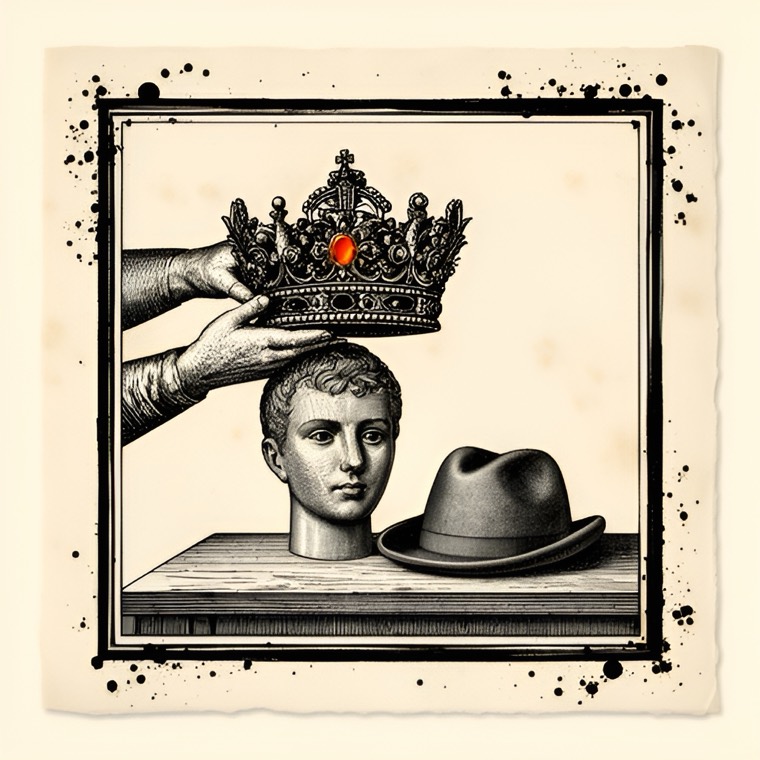
What a throne has made sacred, a throne can make ordinary again. People do not cling to a doctrine as tightly as its guardians pretend. When the highest authority they recognize tells them plainly that a thing is no longer required, most of them put it down with relief. The difficulty lies in finding a ruler willing to say so.
The Emperor's New Year
On the first of January 1946, the people of Japan opened their newspapers to find a message from the Emperor.
For as long as any of them had been alive, they had been taught that he was a living god, the direct descendant of the sun goddess, and that the Japanese were a people set apart from all others and destined to rule them. Schoolchildren bowed each morning toward the palace. His portrait was kept in a special shrine in every school, and headmasters had died in fires trying to rescue it. In his name three million Japanese had perished in a war that ended with two cities turned to ash. Most of his subjects had never heard his voice until the previous August, when he announced the surrender by radio in a court dialect so archaic that many could not follow it.
The New Year's message was written in the same formal style. Buried in the middle of it was a sentence that changed the country. The ties between the Emperor and his people, it said, do not depend on legends and myths. They are not predicated on the false conception that the Emperor is divine, and that the Japanese people are superior to other races and fated to rule the world.
Two weeks earlier the American occupation had ordered the state religion dismantled. Shrines lost their public funding. The doctrine was removed from the schoolbooks.
Then the god went out to meet his people. Through the following years Hirohito toured the country in a rumpled suit and a soft hat, visiting coal mines and factories and making awkward conversation with farmers. He had no small talk, and to nearly everything he was told he replied, Ah, is that so? The crowds wept and cheered anyway.
The most fanatical state cult of the modern age, for which young men had flown aircraft into ships, was gone within a year. There was no uprising in its defense. The Japanese turned their extraordinary discipline to making cameras and cars, and within a generation they were the second richest nation on earth.
4 more minutes: The Bargain and Its Undoing, Interpretation, The Limits, The Method
Members read every case to the end and watch each film before release. The complete argument is also in the book.