
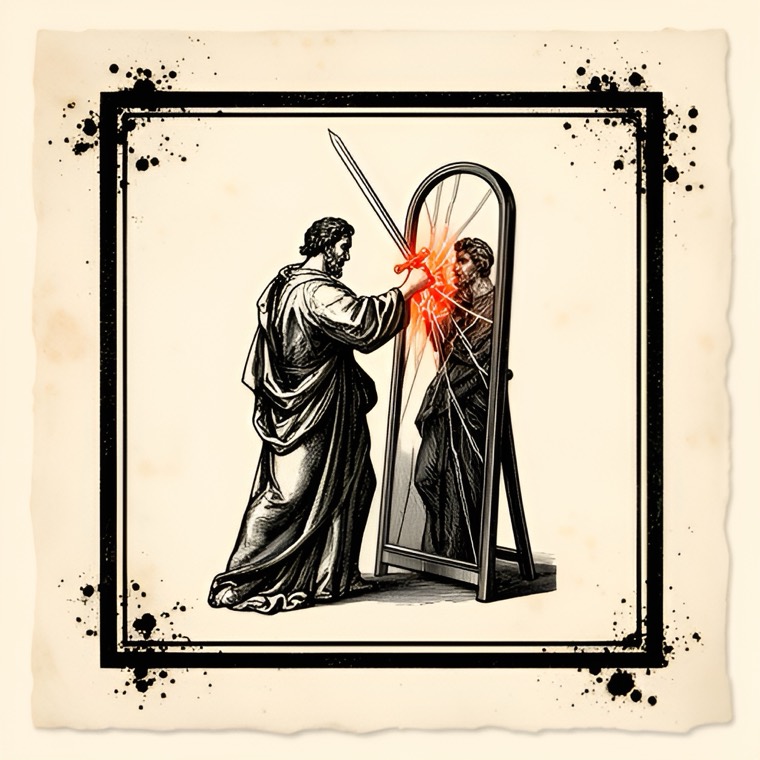
A creed that licenses the killing of unbelievers will soon discover that it has no agreed definition of a believer. The sword sharpened for the outsider is always used first on the neighbor who prays a little differently. To disarm a faith, begin by taking from every man the power to declare who belongs to it.
The Wedding in Paris
In August 1572 the nobility of France gathered in Paris for a wedding that was meant to end ten years of religious war. The bride was the Catholic king's sister. The groom was Henry of Navarre, the young leader of the Protestants. Thousands of Protestant gentlemen rode into the capital for the celebration.
Six days after the ceremony, in the small hours of the feast of Saint Bartholomew, the bells of a church near the Louvre began to ring. Royal soldiers broke into the lodgings of the Protestant commander, Admiral Coligny, stabbed him, and threw the body from the window. Then the city militia went from house to house with lists. They had marked the doors.
The killing went on for three days in Paris and for weeks in the provinces. Neighbors murdered neighbors with whom they had done business for twenty years. Bodies were thrown into the Seine in such numbers that people downstream stopped eating the fish. About three thousand died in the capital, and at least ten thousand across France.
When the news reached Rome, the Pope ordered a hymn of thanksgiving sung and had a medal struck to commemorate the destruction of the heretics.
The men with the lists were not fighting unbelievers. Every person they killed worshipped the same Christ, read the same Gospels, and recited the same creed. The difference between murderer and victim concerned the meaning of a piece of bread.
4 more minutes: The Dome at Samarra, Interpretation, The Method
Members read every case to the end and watch each film before release. The complete argument is also in the book.