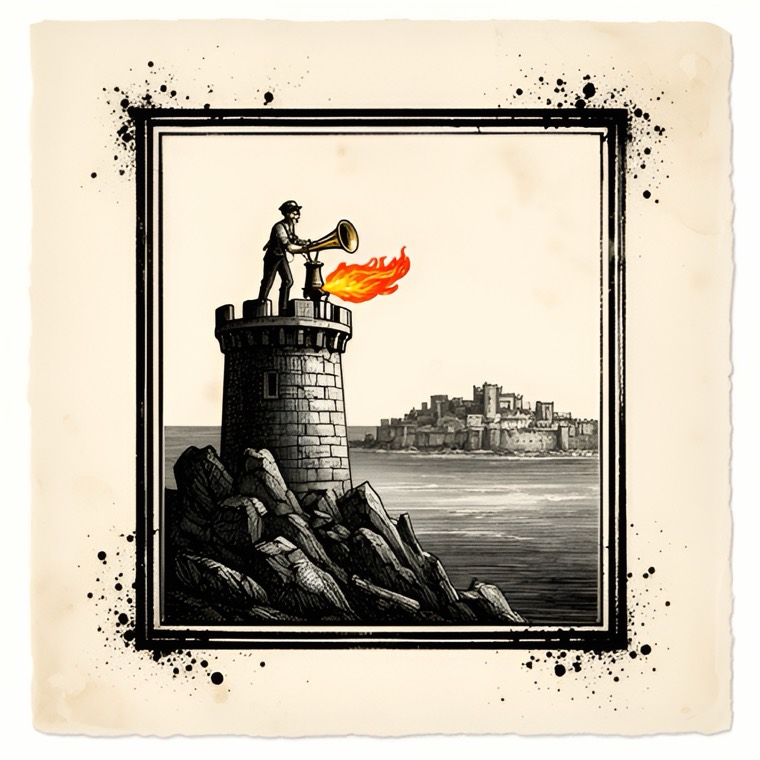
The one who has lived beside a danger knows it better than the one who has read about it. When he warns you, his manners may be blunt and his motives mixed, and still he is likely to be right. A people that will not be told by those with experience must wait to be told by events.
The Orator and the Assembly
In the year 351 before the common era, a young lawyer named Demosthenes rose in the assembly of Athens to speak about a king in the north.
Philip of Macedon had inherited a backward and half-barbarous kingdom and was turning it, with great speed, into the strongest military power in Greece. He had taken the gold mines of Thrace. He was picking off the allies of Athens one city at a time, with a letter of friendship before each attack and an apology after it. Most Athenians did not regard him as a serious matter. He was far away. He said he wanted peace. Men who warned against him were called alarmists and warmongers.
Demosthenes told the assembly that they were asleep. You take your news of Philip, he said, as men take news of a hailstorm, each praying it will not fall on his own field, and none trying to prevent it. You make war on him the way a barbarian boxes: when he is struck, he clutches the place, and when he is struck somewhere else, his hands go there. You are always one blow behind.
He proposed a standing force and a tax to pay for it. The Athenians preferred to keep the money in the fund that paid for their public festivals. They had a law that made it a capital offense even to propose diverting it.
He went on warning them for thirteen years, in speech after speech. In 338 the Macedonian phalanx destroyed the armies of Athens and Thebes at Chaeronea, and the free city-states of Greece came to an end.
6 more minutes: The Minister in Riyadh, What Europe Would Not See, Interpretation, The Method
Members read every case to the end and watch each film before release. The complete argument is also in the book.