On the morning of January 18, 1985, a crowd gathered in the yard of Kobar Prison in Khartoum to watch an old man die.
He was seventy-six. He was an engineer by training, the kind of man who had spent his youth laying out irrigation channels and his later years sitting on a straw mat teaching anyone who cared to come. He had never carried a weapon. He had no party, no militia, and no money. His followers numbered a few thousand, and many of them were women, because he taught that women were the equals of men and let them preach in the street.
His name was Mahmoud Mohamed Taha, and his crime was an idea.
The idea was simple enough to fit in a sentence. The Quran, Taha said, speaks in two voices. In the first, revealed while its prophet was a persecuted preacher in Mecca, it offers freedom of conscience, equality, and peace. In the second, revealed after he had become the ruler of a state at war in Medina, it legislates for battle, for the subjection of women, and for the punishment of unbelief. Muslim jurists had always held that the second voice overrules the first. Taha said they had it backwards. The first was the eternal message. The second was a concession to a rough century, and its time was over.
He had been saying this for thirty years, and for most of them the authorities had let him talk. But in 1983 the ruler of Sudan, a failing dictator named Jaafar Nimeiri, decided to rescue his regime by imposing religious law. Hands were cut off in public. Taha printed a leaflet in protest. He was arrested, tried in a session that lasted a few hours, and convicted of apostasy.
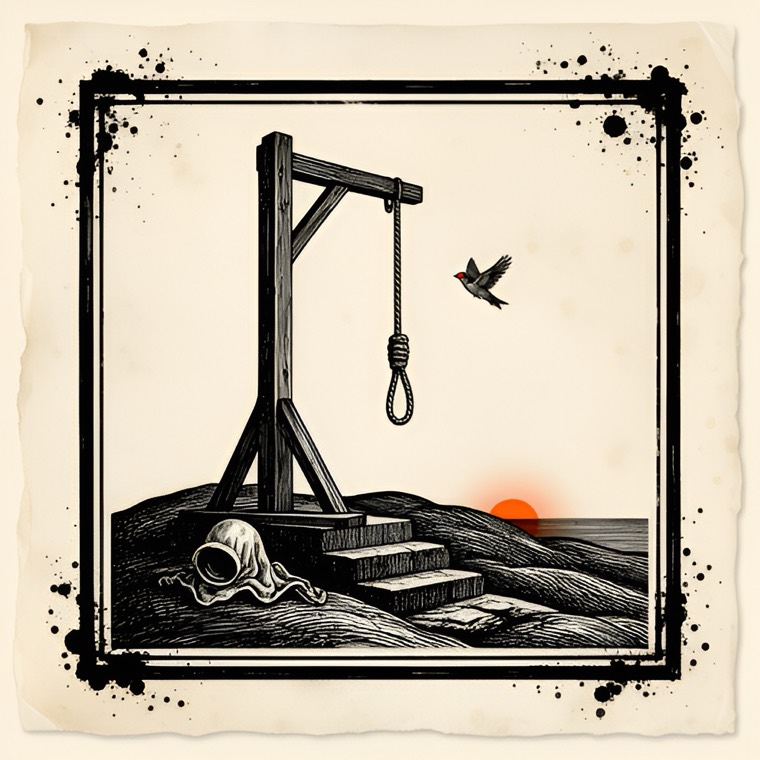
They led him up the steps with a hood over his head. When the hood was lifted so that the crowd could see his face, witnesses said, he was smiling. Then the trap fell. A helicopter carried the body into the desert and buried it in a place no one was told, so that his grave could never become a shrine.
Less than three months later Nimeiri was overthrown. In time a court declared the trial void. But the dead man stayed dead, and his idea stayed dangerous, because it was true and because it threatened something much larger than one dictator.
Consider what Taha had actually done. He had looked at a great religion, the faith of a quarter of mankind, and seen inside it a small number of commands that did not belong to its heart: commands to fight, to kill the one who leaves, to silence the one who mocks, to hold women at half the worth of men. He had seen that these commands all dated from the same few years and served the same purpose, the survival of a young state. And he had shown, from within the faith and using its own tools, that they could be set aside without touching a word of scripture.
He had, in other words, found the charge inside the building and shown how to remove it. The men who hanged him understood that perfectly. A believer who can disarm the doctrine is far more dangerous to those who live by it than any enemy outside.
This book follows the path he opened. It is neither an attack on a religion nor a defense of one. It works the way a bomb disposal officer works. Such a man does not hate the building he enters, and he does not tell the people inside that there is nothing to fear. He goes in quietly, finds the device, studies how it was wired and by whom, and then, with great patience, takes it apart.
The device in this case is old, and it has been wired into something beautiful. That is why it has lasted. But it is a device, it was made by men for reasons that can be understood, and what men have assembled, men can dismantle.
The chapters that follow each begin with a story, because the truth about ideas is found in what they have done to particular people at particular times. From each story a principle is drawn. Taken together, the principles explain how the charge was laid, why it keeps going off, who has profited from it, and how it can at last be made safe.
Taha went to the gallows smiling. One likes to think it was because he knew he was right. The task now is to prove it.