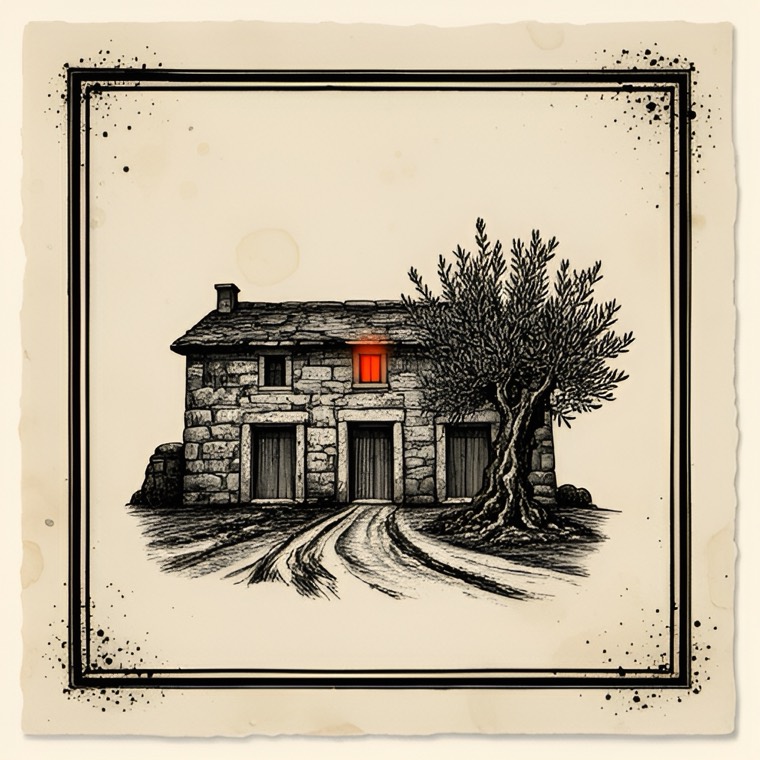
Before you can remove what is dangerous in a faith, you must know what is not dangerous in it, and say so. Most of what Muslims believe and practice is the shared inheritance of half the human race. A critic who cannot tell the house from the charge hidden inside it will be heard by no one who lives there.
The Painting in the Shrine
In January of the year 630, Muhammad entered Mecca at the head of ten thousand men. The city that had driven him out eight years earlier surrendered almost without a blow.
He rode straight to the Kaaba, the cube-shaped shrine at the center of the town. For as long as anyone could remember it had housed the gods of the Arabs. Tradition says there were three hundred and sixty idols in and around it, of wood and stone, and that he went from one to the next and struck each with his staff until it fell. Truth has come, he recited, and falsehood has passed away.
Then he went inside. The walls of the shrine had been painted, in the fashion of the time, with pictures of prophets and angels. He ordered them washed off with water from the sacred well.
One early Meccan chronicler adds a detail that has puzzled readers ever since. Among the paintings, he says, was an image of the Virgin Mary with the infant Jesus on her lap. When the men came with their wet cloths, Muhammad placed his hands over it and told them: wash out everything except what is beneath my hands.
No one can now say whether the report is accurate. But the people who preserved it thought it worth preserving, and it is easy to see why. It shows the founder of the new faith, at the moment of his triumph, standing in a pagan temple and protecting a Christian icon.
5 more minutes: The Inheritance, The Emperor's Debating Hall, Interpretation, The Lesson
Members read every case to the end and watch each film before release. The complete argument is also in the book.